What Is a Green Card? The Ultimate 2026 Guide to U.S. Permanent Residency
What is a green card? Learn how U.S. permanent residency works, who qualifies, and what rights green card holders get.

If you have ever wondered how someone legally builds a permanent life in the United States, the journey often begins with a Green Card. But what is a Green Card? It is the common name for a Permanent Resident Card, which is issued by the U.S. Citizenship and Immigration Services (USCIS). It gives a foreign national the legal right to live and work in the United States on a permanent basis.
While people often use the term "green card" casually in conversation, most widely misunderstand its full meaning. Some people think it is simply a long-term work permit. Others assume it automatically leads to citizenship. Neither is accurate. A green card is its own distinct legal status. It comes with specific rights, real responsibilities, and a defined process for obtaining and maintaining it.
The U.S. immigration system is one of the most complex legal systems in the world. There are multiple pathways to permanent residency. Each pathway has its own eligibility rules, required documents, government fees, and timelines. Without a clear roadmap, the whole thing can feel impossible before you even begin.
This 2026 guide is designed to cut through that confusion. We will cover what a green card is, what it physically looks like, what rights it grants you, how to apply for one, and what comes after. Whether you are at the very beginning of your immigration journey or already in the middle of a process, this is your resource.

What a Green Card Actually Is and What It Looks Like
Let's start with the document itself.
A green card is officially called a Permanent Resident Card. It is a small, credit card-sized piece of plastic issued by USCIS. It serves as official proof that the holder has been granted lawful permanent residency in the United States.
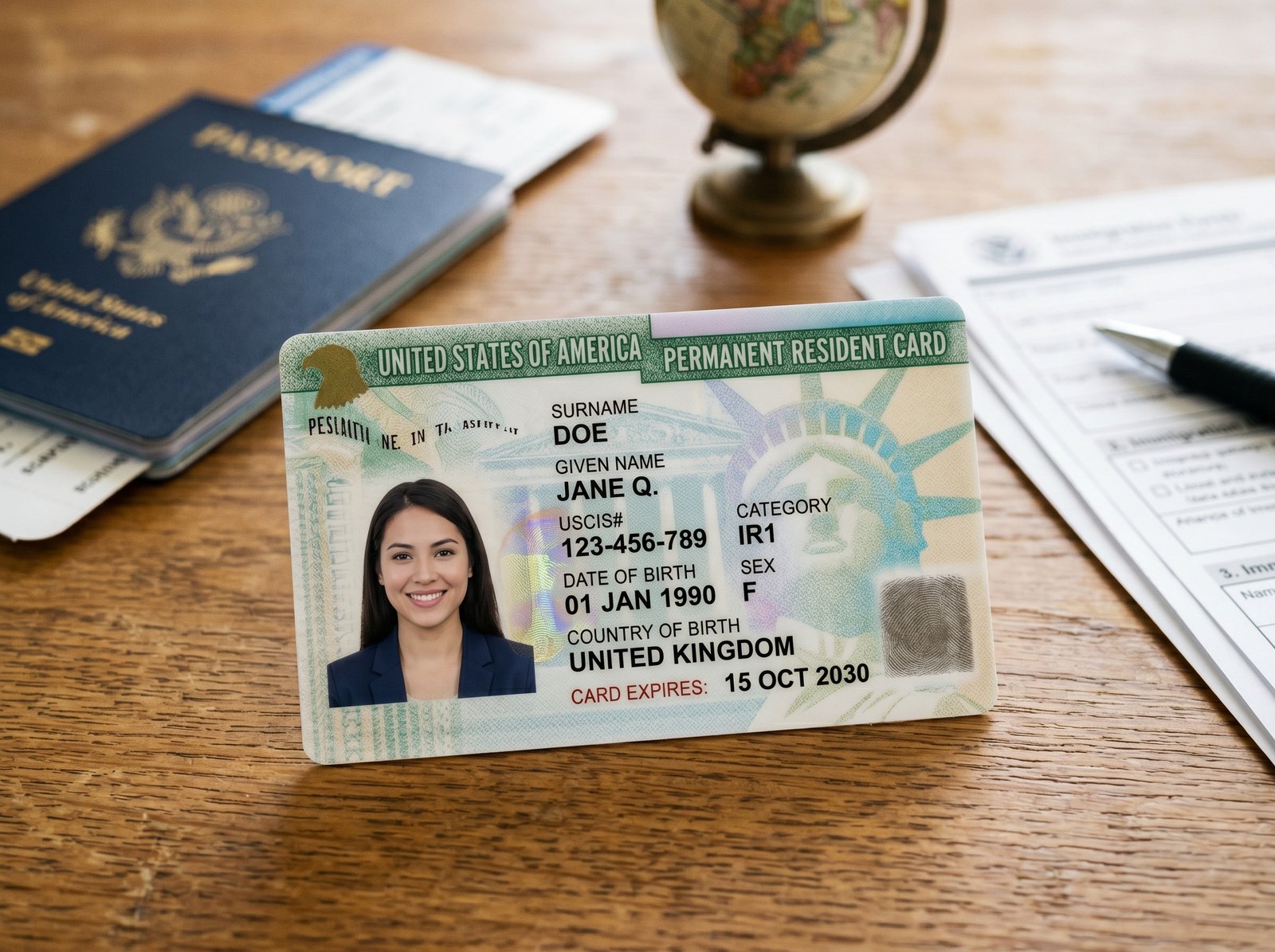
Many people are surprised to learn that today's card is not actually green. In the 1940s and 1950s, the government printed early versions of the card on green paper. That is where the nickname came from. The name stuck through decades of redesigns. Today, the card features a layered, multi-color design with sophisticated security features built into the material itself.
So what does a green card look like today? Here is what appears on the modern version of the card:
The cardholder's full legal name
A current photograph of the cardholder
The cardholder's date and country of birth
An alien registration number, known as the A-Number
A card expiration date
A machine-readable zone on the back for quick verification at ports of entry
What Is a Green Card? The Two Types
Most green cards issued to permanent residents are valid for ten years. However, there is an important distinction worth noting. The physical card expires. Your status as a permanent resident does not. An expired card does not mean your residency has ended. It means you need to renew the card itself. Think of it like renewing a driver's license. The license to drive remains valid. The card simply needs to be updated.
There is also a second type: conditional permanent resident cards. These are issued to people who received their green card through a marriage of less than two years at the time of approval. These cards are only valid for two years. Conditional residents must file to have the conditions removed before the card expires or risk losing their status entirely. This is one of many details that can catch people off guard without proper guidance.
The Rights and Benefits of Holding a Green Card
A green card does far more than give you permission to remain in the country. It fundamentally changes what you are able to do, where you can go, and what opportunities are within reach.
The Freedom to Work for Any Employer
Permanent residents can work for any employer in the United States. Once you hold a green card, you do not need an employer to sponsor you or maintain your immigration status. You can change jobs, change industries, become self-employed, or start your own business. This is a substantial difference from many temporary work visas, which tie workers to a specific employer.
No Geographic Restrictions
You can live in any state or city in the country. There are no restrictions tied to a specific location, employer, or visa condition. This freedom gives permanent residents the flexibility to pursue opportunities wherever they exist.
International Travel
Green card holders can leave the United States and return. However, extended absences can threaten your status. Staying outside the country for six months or more can raise concerns with border officers about whether you have abandoned your residency. Absences of one year or longer carry serious legal risks. If extended international travel is part of your life, there are protective steps worth understanding before you go.
Educational Advantages
Many public universities and colleges offer in-state tuition rates to permanent residents. International students typically pay out-of-state or international rates, which are often two to three times higher. For families with children or for residents pursuing continued education, this benefit alone carries significant long-term financial value.
The Ability to Sponsor Certain Family Members
Permanent residents can petition for some immediate family members to come to the United States. The categories available to green card holders are more limited than those available to U.S. citizens, but it opens an important door for family reunification.
A Defined Path to U.S. Citizenship
For many people, the long-term value of a green card lies in what it makes possible next. Permanent residency is typically the required step before applying for U.S. citizenship through a process called naturalization. That process is covered in detail later in this guide.
Can Green Card Holders Vote?
This question deserves a direct answer. Can green card holders vote locally? No. Permanent residents cannot vote in federal, state, or nearly all local U.S. elections. Voting as a non-citizen is a serious immigration violation.
How to Get a Green Card: The Main Pathways in 2026
There is no single answer to how to get a green card. The correct path depends entirely on your individual circumstances. Your family situation, your employment, your country of birth, and other personal factors all shape which route is available to you.
Family-Based Immigration
Family-based immigration is one of the most common ways people obtain a green card. U.S. citizens can petition for immediate relatives, including spouses, unmarried children under the age of 21, and parents. These relationships are not subject to annual numerical limits. That means there is no waiting list based on visa availability.
For other family preference categories, annual caps apply. Wait times for those categories can range from a few years to several decades, depending on your country of origin and the specific relationship to the petitioner.
Employment-Based Immigration
U.S. employers can sponsor foreign nationals for permanent residency. There are five preference categories within the employment-based system. They are organized by skill level and type of occupation. The top category covers individuals with extraordinary ability in their fields. Other categories cover professionals holding advanced degrees, skilled workers, and certain other workers. Some highly qualified individuals can petition for themselves without an employer sponsor. Timelines in this category vary widely based on the applicant's country of birth and the specific preference category.
The Diversity Visa Lottery
Each year, the U.S. government makes approximately 55,000 green cards available through the Diversity Immigrant Visa Program. This program is open to nationals of countries that have historically sent lower numbers of immigrants to the United States. Winning the lottery does not guarantee a green card. It makes a person eligible to begin the formal application process. Applications for the lottery open annually during a designated registration window.
Refugee and Asylum Pathways
Individuals who have been granted refugee or asylum status in the United States may apply for a green card after one year of continuous residence in the country. This pathway has its own eligibility criteria and documentary requirements.
Special Immigrant Categories
Additional green card options exist for specific groups. These include certain religious workers, long-term employees of qualifying international organizations, special immigrant juveniles, and others who qualify under specialized provisions of immigration law.
What Most Applicants Will Need
Regardless of the pathway, most green card applicants are required to meet a core set of standards:
Be admissible to the United States under current immigration law
Have a qualifying petitioner, employer sponsor, or other legal basis for the application
Complete a medical examination conducted by a USCIS-approved civil surgeon
Attend an interview at either a USCIS field office or a U.S. consulate abroad
Submit a thorough application package with all required supporting documentation
From Green Card to Citizenship: Understanding Naturalization
For many permanent residents, a green card is not the final destination. It is the step just before the most significant milestone of all. That next step is citizenship, reached through a legal process called naturalization.
What is naturalization? It is the formal, legal process through which a lawful permanent resident becomes a U.S. citizen. Naturalization is not automatic. It requires meeting specific eligibility requirements and completing a formal application and interview process with USCIS.
Most applicants must have held permanent residency for at least five continuous years before applying. Those married to a U.S. citizen and living in marital union may apply after three years. Applicants must also demonstrate continuous physical presence in the U.S. during that period. They must show they have maintained a residence in their USCIS district for at least three months before filing.
The naturalization process also includes two formal tests. The first is an English language assessment covering reading, writing, and speaking at a basic proficiency level. The second is a civics test. It evaluates the applicant's knowledge of U.S. history and the structure of the federal government. Both tests are administered during the naturalization interview.
Citizenship unlocks rights and protections that go well beyond what a green card provides. U.S. citizens can vote in all elections. They can hold a U.S. passport. They can petition for a broader range of family members than permanent residents are permitted to. Citizenship also removes the small but real risk of losing your status, which remains a legal possibility for permanent residents under certain conditions.
You Deserve an Immigration Partner Who Understands Your Journey
The U.S. immigration system was not built to be navigated alone. Forms get rejected for minor mistakes. Deadlines carry serious consequences. Requirements shift, and staying on top of it all while living your daily life is genuinely hard.
Working with a qualified immigration attorney does not just reduce stress. It reduces real risk. It means your application is accurate, complete, and submitted correctly.
At Munoz Llamosas Law, PLLC, attorney Maricela Munoz has built her practice around one core belief: immigration is not just a legal process. It is one of the most personal things a person can go through. Having lived the immigrant experience herself, she brings both the expertise and the empathy that this work requires.
The firm operates as a fully online practice, serving clients across all 50 states. Services include family-based petitions, employment-based immigration, green card applications, naturalization filings, and more. Flat-fee pricing means you always know exactly what your legal costs will be. Frequent case updates, provided in both English and Spanish, mean you are never left wondering where your case stands.
For every five hours of paid legal work, attorney Munoz commits one hour to pro bono services. That is not a marketing line. It is a reflection of what this practice is actually about.
Ready to take your next step? Schedule a consultation with Munoz Llamosas Law today. Get honest answers, real guidance, and a legal partner who will stand with you through every stage of the process.